http://mariajesuscamino.com/webquestion/textura1/
First, have a look this information and the pictures about music textures you have in this Blog.
You must to take into account that:
What does musical texture mean? Think of a piece of fabric, and the different qualities it might have. It could be soft, course, heavy, light, slippery, shiny, etc. The same thing applies to music. While music might not be shiny or slippery, it has inherent qualities that makes it unique. Different types of texture can be described by the number of parts, harmony, tempo, timbre and rhythm. We will go through several types of musical texture in the following post.
Monophonic textures
Literally meaning one voice, monophonic texture (monophony) refers to a single melodic line, though it may be played by one or many instruments. The voices may be in exact unison or in different octaves, as long as the same notes and rhythms are played. Nonpitched rhythmic accompaniment may be present as well. A few examples of monophony include group singing of simple tunes such as “Happy Birthday” or “The Star Spangled Banner,” a solo trumpet playing “Taps,” or someone whistling a song.
Poliphonic textures
Melody with accompaniment texture is the most common texture in Western music, both classical and popular. It is defined as having one voice, a melody, which stands out from background accompaniment. The accompaniment may be simple chords or a harmony with melodic interest, but in either case, the main melody must be clearly distinguishable. It can be anything from a singer accompanied by guitar chords, to compositions by classical composers.
Counterpoint texture involves multiple melodic voices, all of equal importance, occurring simultaneously. This complex, dense texture is typical of Renaissance and baroque music. Keep in mind, though, that multiple voices does not necessarily mean multiple instruments; polyphonic music can be played on a single keyboard instrument or guitar. Many examples of polyphony can be found in the music of Bach. All rounds, canons, and fugues (where melodies enter at different times) are considered polyphonic.
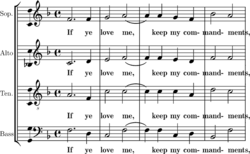
Homorhythm texture is a texture where there is a "sameness of rhythm in all parts" or "very similar rhythm" as would be used in simple hymn or chorale settings. All voices sing the same rhythm. This texture results in a homophonic texture, which is a blocked chordal texture.